Main Concept & Side Effects of Micro-Needling

If you are Unsure about the concept of micro-needling then you should know that it is a treatment to encourage your skin to create extra collagen. It has been observed that pinpricks from the procedure cause a bit of injury to the skin and eventually the skin reacts by developing new collagen-rich tissue.
The recently developed skin tissue is more uniform in tone and texture. According to a leading micro-needling specialist in California, there isn’t anything absurd in the skin suffering due to the loss of collagen because of injury or age. You can be supportive to the skin for creating new tissue. Also, there could be more collagen to help in making the skin stronger.
Process of Micro-Needling
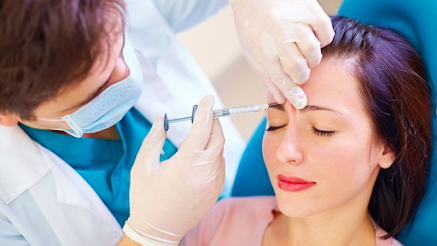
During the entire procedure, your doctor creates little pricks below the skin with a pen-like tool. The pinpricks are so tiny that you possibly can’t observe them after applying the method. Your doctor will move the tool uniformly across your skin so that the new skin that rejuvenates will be smoothened as well.
Before getting the ball rolling, your doctor will apply a topical anesthetic to minimize the possibilities of pain. This is performed for almost an hour before your treatment. The actual micro-needling procedure takes around 30 minutes.
Then, your doctor may employ a serum or calming treatment. Altogether, you can at least expect yourself to be at the office for around a couple of hours.
Micro-needling is mostly applied on your face to target the following areas:
decreased skin elasticity
acne scars
dented skin tone
age spots (Termed as “sun spots” by many)
fine lines and wrinkles
large pores
other types of scars
Apart from facial concerns, micro-needling is often applied to heal stretch marks in other parts of the body. One research discovered that micro-needling was useful for stretch marks on the thighs and abdominal area while blended with fillers.
Scarring on different other body parts may also be healed with this method. But micro-needling is mostly applied to the face.
Side Effects
When it comes to side-effects, one must admit that similar to other cosmetic procedures, micro-needling isn’t without risk.
The possible side effects could be as follows-
- Minor Skin Irritation
- Redness
- Bleeding
- Bruising
- Infection
- Peeling
The commonest possible side effect is minor skin irritation immediately after the procedure. You may also witness redness for a few days. Call your doctor if you observe more severe micro needling side effects, such as bleeding, bruising, infection or peeling. Remember that you may not be a suitable candidate for micro-needling if you:
Are pregnant
Are suffering from specific skin diseases, like psoriasis or eczema
Have open wounds
Had recently undergone any radiation therapy
Have a history of skin scar
You can be rest assured that micro-needling isn’t invasive such as plastic surgery, so the recovery time is very less. According to most experts, people mostly need a very little downtime, if any at all.
You may observe skin irritation and redness within the first few days after the procedure. This is quite natural due to the response to the small “injuries” made by the needles of your skin.
You can get back to work or studies after the procedure if you’re at ease. Few people use camouflaging makeup during the initial few days as the redness disappears.
Your skin will be more responsive to the sun too, so sunscreen is mandatory. After micro-needling, your skin works quite quickly for rejuvenating new tissue. In reality, you are expected to witness results within a couple of weeks.
To upkeep the results of your treatment, you’ll require multiple sessions and perhaps other complementing treatments. Your doctor will guide you on the best plan of action depending on your individual goals.
Inference
Before you avail of the micro-needling treatment in California, you must speak with your doctor about processes you can prepare so that you could enjoy the best possible outcome. You may have to refrain from availing of a few medications, like ibuprofen and those for acne treatment, well in advance of the procedure. The doctor may even suggest that you stop applying topical retinoids beforehand as well. Doing so may minimize the risk of specific side effects.

Comments
Post a Comment